
Microsphere Project Partners

The Centre of Environmental and Ethical Education Živica (CEEV Živica) is a non-governmental, non-profit organisation based in Slovakia, established in 2000. It focuses on environmental education, sustainable development, ethical values and responsible behaviour towards nature and society. Through innovative educational programmes, practical workshops and experiential learning, Živica supports teachers, students and local communities in developing environmental awareness and taking meaningful action towards sustainability.
The organisation has extensive experience in working with schools and educators through initiatives such as the Green School programme, outdoor education activities and teacher training. Its educational approach emphasises learning through direct experience, critical thinking and active participation. Živica also operates the Zaježová Educational Centre, providing opportunities for environmental education, professional development and practical learning in natural surroundings.
As the coordinator of MicroSphere+, Živica will support effective cooperation among project partners and contribute its expertise in environmental education, outdoor learning and school engagement. Its experience will help connect scientific research on microplastics with accessible educational activities, encouraging students and teachers to explore environmental challenges through hands-on investigations and citizen science.

Dermol svetovanje d.o.o. is a small and medium-sized enterprise (SME) based in Slovenia, specialising in digital solutions, e-learning, website development and consulting. The company designs and manages online learning platforms, educational portals and digital communication tools, helping organisations make knowledge accessible to wider audiences. Its activities also include the development of digital strategies, the creation of interactive learning experiences and technical support for international conferences and online events.
The company has extensive experience in European cooperation projects, particularly Erasmus+ initiatives involving education, innovation and digital transformation. Dermol develops project websites, online courses and learning management systems, integrating multimedia content, quizzes, digital badges and certificates. It also manages educational platforms, including the Slovenian learning portal Znanje.biz, and supports the long-term accessibility and sustainability of project results.
Within the MicroSphere+ project, Dermol will contribute its expertise in digital learning, online communication and the presentation of educational and scientific content. Its experience will help make project activities and results accessible to teachers, students and the wider public, supporting the use of innovative digital tools for environmental education and awareness of microplastics pollution.

Alenka DERMOL
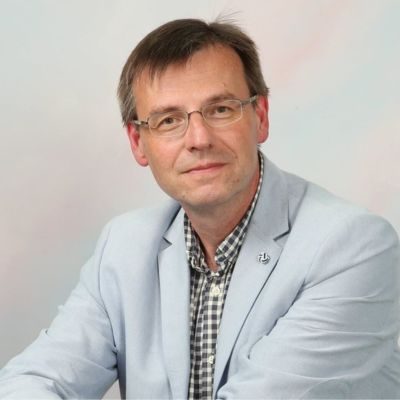
Valerij DERMOL

Špela DERMOL - TAVČAR

The Faculty of Environmental Protection (FEP), located in Velenje, Slovenia, is an independent higher education institution specialising in environmental protection, ecotechnologies and interdisciplinary environmental research. The faculty offers undergraduate and postgraduate study programmes that combine natural sciences, technical knowledge and practical approaches to environmental challenges. Its educational and research activities address a wide range of topics, including water, air and soil pollution, waste management, nature conservation, environmental monitoring and the impacts of human activities on ecosystems.
The faculty places strong emphasis on connecting scientific knowledge with practical experience. Students participate in fieldwork, laboratory activities and research projects, developing the skills needed to identify, investigate and address environmental problems. FEP also cooperates with research institutions, public organisations and businesses, and actively participates in international educational and research initiatives, including Erasmus+ projects. Through these activities, the faculty promotes scientific understanding, environmental responsibility and the application of research findings in real-world settings.
Within the MicroSphere+ project, the Faculty of Environmental Protection will contribute its scientific expertise in environmental monitoring, pollution research and field investigation methods. Its knowledge will support the development of practical approaches to microplastics sampling, the interpretation of environmental data and the integration of scientific research into educational activities. By connecting environmental science with hands-on learning, the faculty will help students and teachers better understand microplastics pollution and develop practical research competences.

Anja BUBIK

Lea KOMERIČKI KOTNIK

Katrin ŠKOLNIK ŠKRABE
Muğla Provincial Directorate of National Education (Muğla İl Millî Eğitim Müdürlüğü) is a public educational authority operating under the Ministry of National Education of Türkiye. Located in southwestern Türkiye, the Directorate is responsible for the administration, coordination and supervision of educational institutions throughout Muğla Province. Its activities cover different levels of education, including general education, vocational education and training (VET), special education and lifelong learning. The organisation works closely with schools, teachers, students and local stakeholders to improve educational quality, promote innovation and support inclusive learning opportunities.
The Directorate has extensive experience in coordinating educational initiatives and participating in European cooperation programmes, particularly Erasmus+ projects. Its activities focus on teacher professional development, international cooperation, digital transformation, innovative teaching methodologies and environmental sustainability. Through its broad network of schools and educational institutions, the Directorate facilitates the exchange of good practices and supports the introduction of new educational approaches into everyday teaching. It also encourages cooperation between educational institutions, public authorities and local communities.
Within the MicroSphere+ project, Muğla Provincial Directorate of National Education will contribute its experience in vocational education, school cooperation and the implementation of educational activities. Its network of teachers and students will support the integration of microplastics research into practical learning, including supervised field investigations, citizen science activities and environmental awareness initiatives. The Directorate will also help promote project resources and encourage the wider use of innovative approaches to environmental education.

Codearrays Ltd is a technology company based in Cyprus, specialising in educational software development, digital learning solutions and innovative technologies. The company focuses on creating interactive and accessible learning experiences that connect technology with education and professional development. Its activities include the design and development of web and mobile applications, e-learning platforms, educational games and digital tools that support modern teaching and learning approaches.
The company has expertise in immersive technologies, particularly virtual reality (VR) and augmented reality (AR), which enable learners to explore complex subjects through interactive simulations and three-dimensional environments. Codearrays also works with artificial intelligence, personalised learning solutions and digital systems for recognising skills and learning achievements. By combining software development with educational methodologies, the company aims to make learning more engaging, practical and accessible to different target groups.
Within the MicroSphere+ project, Codearrays will contribute its technological expertise to the development of innovative digital learning experiences and the visualisation of environmental research findings. Its skills in interactive software and immersive technologies will support the project’s planned VR European Map, helping students and teachers explore microplastics pollution and environmental data in an engaging and accessible way. Through these activities, Codearrays will help strengthen digital competences and connect scientific knowledge with innovative educational tools.