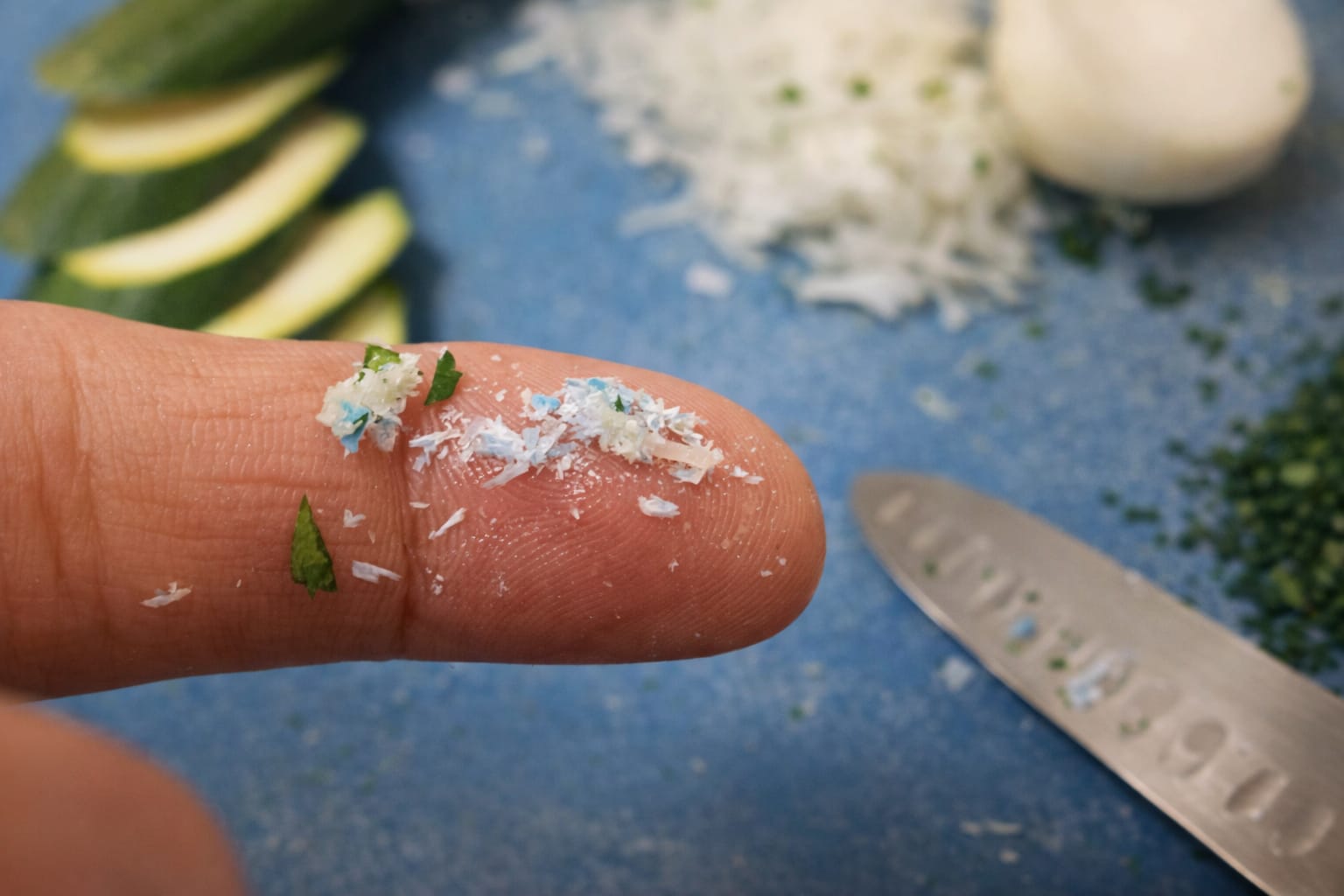
Plastic pollution is often associated with oceans and large waste streams, but microplastics can also originate from everyday activities at home — even in the kitchen.
One surprising source is plastic cutting boards. Many commonly used boards are made from polypropylene (PP) or polyethylene (PE). During normal use, repeated cutting, chopping, and abrasion gradually wear down the surface of these boards. Over time, this process can release tiny plastic fragments, known as microplastics.
Even routine tasks like chopping vegetables can contribute to this hidden source of microplastics. Some particles may remain in food, while others can be washed down the drain and eventually enter the wider environment.
What Can Help Reduce Microplastic Release
While plastic cutting boards are widely used for convenience and hygiene, a few simple choices can help reduce microplastic generation:
- Choose durable alternatives when possible, such as wood or glass cutting boards
- Replace boards that are heavily scratched, rough, or worn
- Clean and maintain boards regularly to reduce additional abrasion and surface damage
Small Choices Matter
Microplastics often originate from small, everyday processes that go unnoticed. By becoming more aware of these sources, households can take simple steps that contribute to reducing plastic pollution and protecting both human health and the environment.
Raising awareness about these hidden sources is part of the mission of the EDU4PlastiCircular Erasmus+ project. Through our platform microplastics.today, we share insights, educational materials, and practical knowledge about plastics and microplastics within the circular and climate-neutral economy.
Small everyday choices can make a meaningful difference.