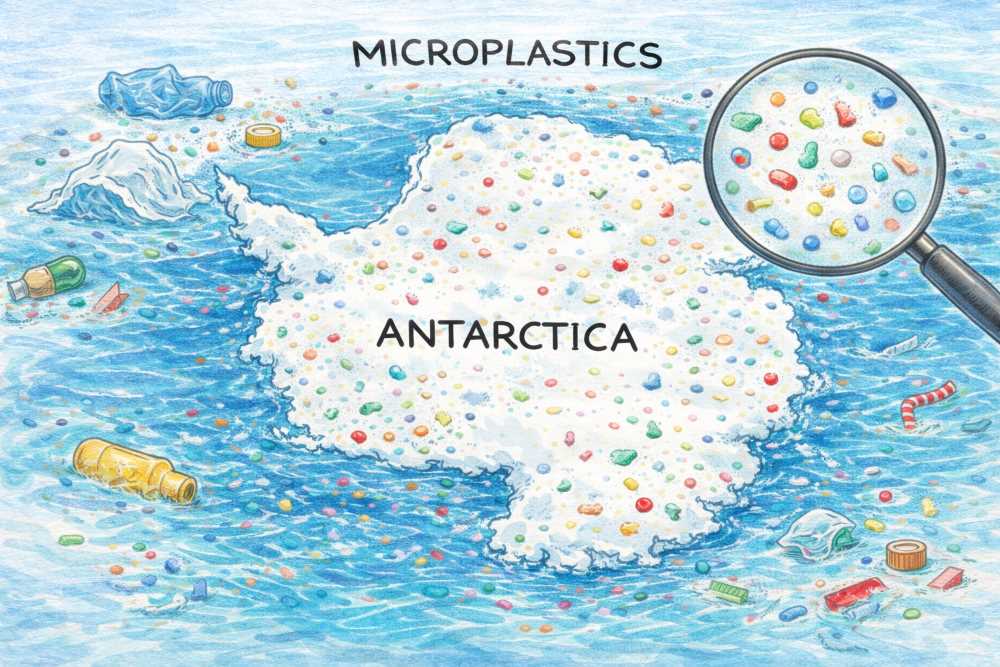
Exciting developments in microplastics research show just how far plastic pollution can travel. Dr. Victoria Fulfer, a microplastics scientist from the organization 5 Gyres, is currently heading to Antarctica to investigate whether microplastics have reached one of the most remote environments on Earth.
During the expedition, she will collect samples from seawater, sediment, and air to better understand how microplastics travel, settle, and persist across the planet. Ocean currents and atmospheric transport can carry microscopic plastic particles thousands of kilometres from their original sources, meaning even polar ecosystems may not be immune.
Research missions like this help scientists answer critical questions:
- How far can microplastics travel through ocean currents and the atmosphere?
- Do they accumulate in remote polar environments?
- What pathways allow plastic particles to reach such isolated regions?
These questions are highly relevant to the work we are doing through the EDU4PlastiCircular Erasmus+ project. The project aims to improve knowledge, awareness, and practical skills related to plastics and microplastics in the circular and climate-neutral economy.
Through our platform microplastics.today, we share educational resources, insights, and tools that help educators, professionals, and communities better understand the sources, impacts, and prevention of microplastic pollution.
Scientific expeditions like this remind us that microplastics are not just a local issue—they are a global environmental challenge. Strengthening education and knowledge is essential if we want to reduce emissions and prevent further pollution.
Follow our platform microplastics.today for more updates, research insights, and learning materials on plastics and microplastics.
Because prevention starts with knowledge.