The plastics crisis is a complex global problem, and no single organisation or sector can solve it alone. Real progress depends on collaboration—bringing together experts from different fields to share knowledge, ideas, and solutions.
This was the focus of the CSRW26 Conference (2nd International Conference on Circularity, Sustainability and Resilience in Water Systems). The event gathered researchers, engineers, policymakers, and environmental experts to address challenges related to water, energy, and waste, including plastic pollution.
The EDU4PlastiCircular (Edu4Plastic) project supported the conference as a sponsor and actively took part in the programme. Our project partner University of Insubria (Uninsubria, Italy) played a key role in this activity and was responsible for the project’s participation in the event.
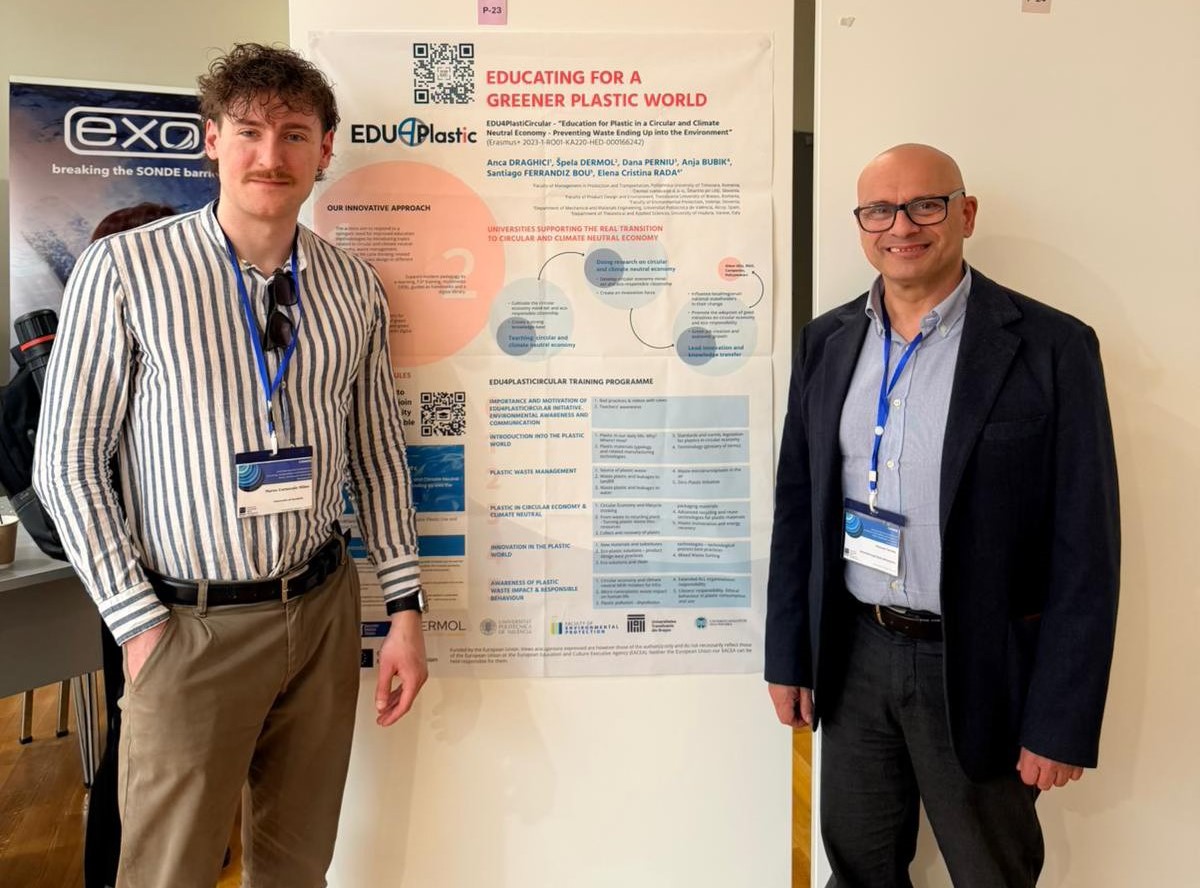
During the conference, the project team presented a poster showcasing their latest work, including new educational approaches and practical models designed to integrate circular economy principles for plastics into higher education and industry.
These efforts aim to help students, teachers, and professionals better understand plastic pollution and apply sustainable practices in their daily work. By focusing on education and skills, the project supports long-term change.
Participating in CSRW26 also helped connect academic research with real-world industry needs. This connection is important to ensure that ideas and innovations can be applied in practice and lead to real environmental impact.
Projects like EDU4PlastiCircular show that education and collaboration go hand in hand. By working together across sectors, it is possible to move from awareness to action and build a more sustainable future.
Solving the plastics crisis will take time, but one thing is clear: collaboration is essential.